blog Join the waitlist

30 German phrases you will actually use in Germany

Useful German for your weekly shop, appointments, lunch breaks and conversations with neighbours.

4 Nov 2026|Upluency team
A German flag next to a big 30 with speech bubbles

The German phrases you need most help you ask for help, pay for shopping, order food and arrange appointments. You also need ways to ask someone to repeat themselves. These 30 short phrases give you words you can use in everyday conversations when you live in Germany.

Basics and politeness

You can use these with strangers, colleagues and neighbours. A polite opening helps when you need someone's attention.

Entschuldigung, können Sie mir helfen?Excuse me, could you help me?Use Sie with an adult stranger.
Ich hätte eine Frage.I have a question.A polite way to start.
Vielen Dank!Thank you very much!
Kein Problem.No problem.Use it after thanks or an apology.
Einen schönen Tag noch!Have a nice day!Say this as you leave.

Shops and the supermarket

You need these at the checkout and when returning deposit bottles. Kasse means checkout. Pfand is the deposit on returnable bottles or cans.

Wo finde ich die Milch?Where can I find the milk?Swap Milch for the item you need.
Ist diese Kasse offen?Is this checkout open?
Wo ist der Pfandautomat?Where is the bottle return machine?Most supermarkets have one near the entrance.
Kann ich hier mit Karte bezahlen?Can I pay by card here?Ask if you're unsure.
Mit Karte, bitte.By card, please.Use this when you're ready to pay.

Cafés and restaurants

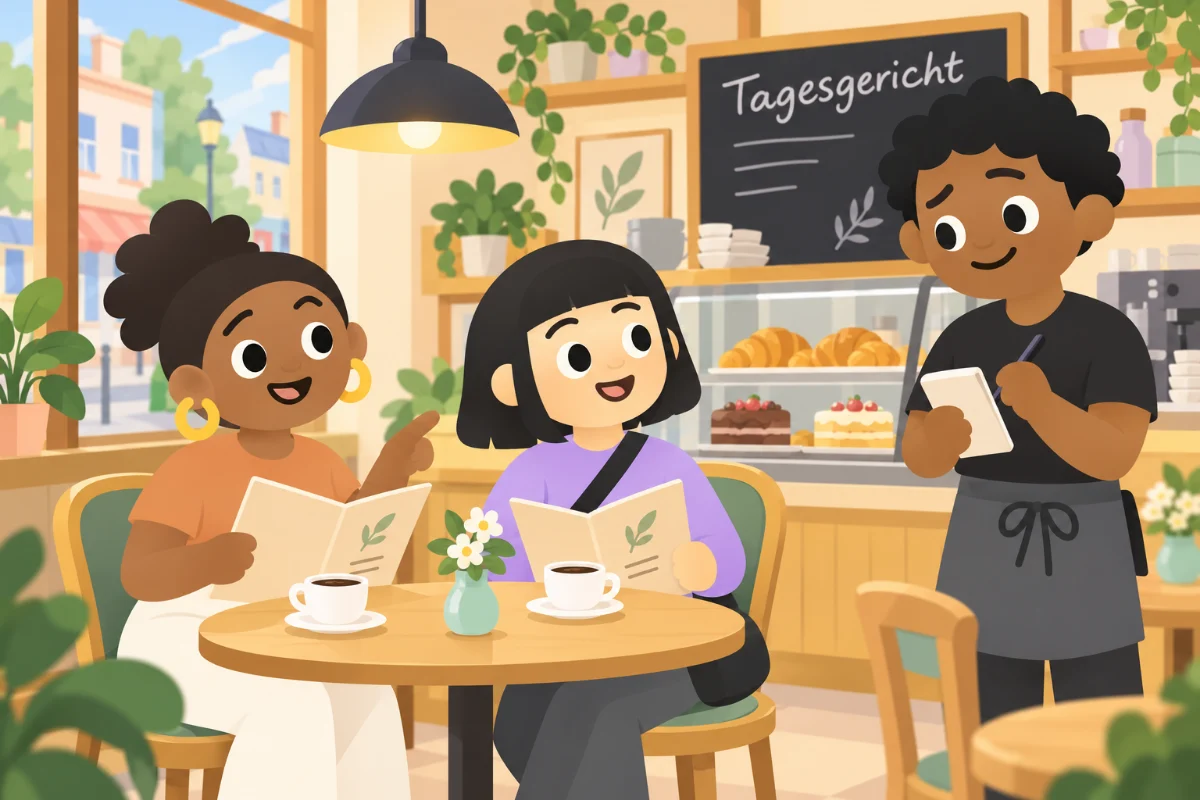
Use these when you stop for coffee or go out for dinner. Bitte makes a short order polite.

Haben Sie einen Tisch für zwei?Do you have a table for two?
Ich hätte gern einen Kaffee.I'd like a coffee, please.
Kann ich ein Glas Leitungswasser bekommen?Could I have a glass of tap water?
Die Rechnung, bitte.The bill, please.
Wir würden gern getrennt bezahlen.We'd like to pay separately.Use this when each person pays their share.

When you don't understand

You don't have to understand every word to keep a conversation going. Ask for a slower explanation or something you can read.

Ich lerne noch Deutsch.I'm still learning German.
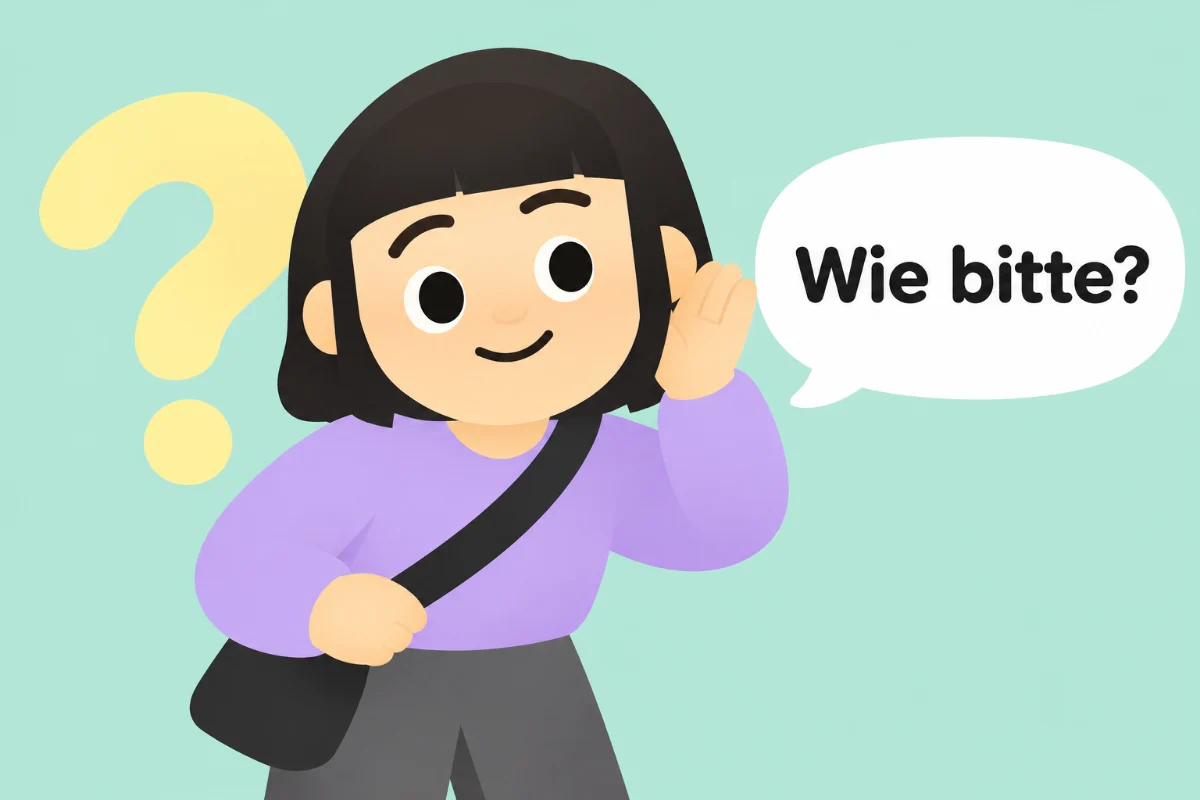
Können Sie das bitte wiederholen?Could you repeat that, please?
Können Sie bitte etwas langsamer sprechen?Could you speak a little more slowly, please?
Was bedeutet das?What does that mean?Point to a word or ask about something you've heard.
Können Sie mir das bitte aufschreiben?Could you write that down for me, please?Useful for addresses and instructions.

Appointments and phone calls

Keep these nearby when you call a doctor's surgery or another office. You can use them to book a time or change an existing appointment.

Ich möchte einen Termin vereinbaren.I'd like to make an appointment.
Wann hätten Sie einen Termin frei?When would you have an appointment available?
Ich muss meinen Termin verschieben.I need to reschedule my appointment.
Könnte ich bitte Frau Müller sprechen?Could I speak to Ms Müller, please?Replace Frau Müller with the person's name and title.
Können Sie mich bitte zurückrufen?Could you call me back, please?Make sure they have your number.

Small talk at work and with neighbours

A short question can start a conversation in the kitchen or the stairwell. Use Sie until you agree to switch to du.

Wie war Ihr Wochenende?How was your weekend?With du, use dein instead of Ihr.
Schönes Wetter heute, oder?Lovely weather today, isn't it?
Möchten Sie auch einen Kaffee?Would you like a coffee too?With du, start with Möchtest du.
Ich bin neu hier.I'm new here.Useful at work or after moving in.
Schönen Feierabend!Have a nice evening!Say this when someone finishes work.

Make these phrases part of your day

Pick three phrases you expect to need tomorrow. Say them aloud a few times. Practise changing one word in an order or question so you can use it in different situations.

Try one phrase during your next errand or lunch break. Listen to the reply. If you don't understand, ask the person to repeat it. Keep the phrases on your phone so you can check them before you speak.

Questions

Which German phrases should I learn first?

Start with polite requests, asking someone to repeat themselves and paying for shopping. Then choose phrases for the situations you face most often. If you have an appointment coming up, practise those questions first.

Should I use Sie or du in Germany?

Use Sie with adult strangers and in formal appointments. Du is fine with friends and people you've agreed to address informally. Workplace habits vary. Follow your team's usual practice or ask if you're unsure.

How can I practise German phrases as a beginner?

Say each phrase aloud and practise a possible reply. Use it when the situation comes up in your day. Upluency is a German course app where you practise conversations like these.
Try it when it opens

We will email you when it is ready.

Join the waitlist