If you understand German but cannot speak it, start by speaking out loud every day. Do it alone if you have to. Prepare the conversations you have most often. Use short sentences you can control and a few phrases that buy you time. Then practise with someone who waits for you. This gap is normal.
Phrases that buy you time
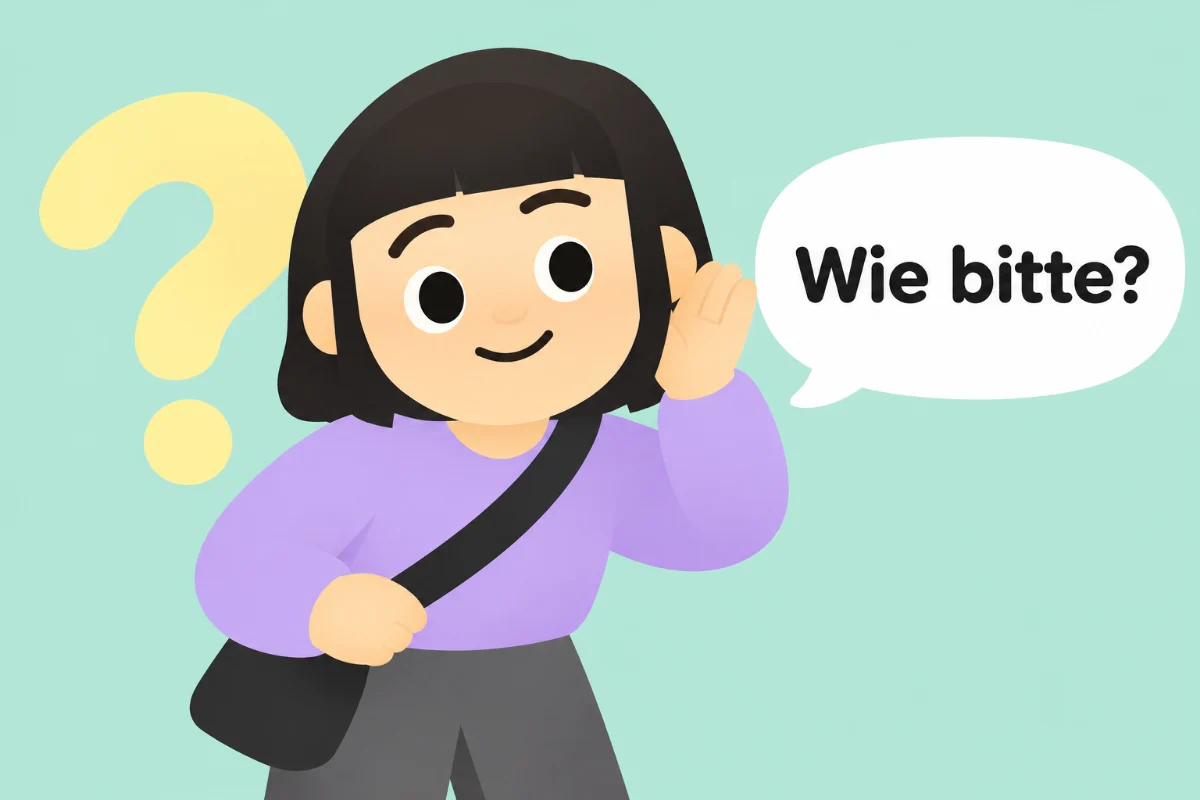
You do not need a perfect sentence ready. These phrases give you a few seconds to think or ask for help.
Why understanding comes first
Recognising a word is easier than producing it. When you listen, the sentence is already built for you. You only need to follow it. When you speak, you have to find the words, put them in order and choose the right endings. All of this happens while someone is waiting.
Most learners spend far more time listening and reading than speaking. Courses, films and podcasts all train your ears. Few of them ask you to build a sentence out loud under time pressure. So your understanding grows and your speaking stays behind.
This gap is normal. You have simply had little practice producing sentences. You can start adding that practice today.
How to start speaking
Speak out loud every day. Do it even when you are alone. Describe what you are doing while you cook or walk to the tram. Read a short text aloud. Your mouth needs practice as much as your head does.
Prepare the five conversations you have most often. For many people these are the bakery, the doctor, a neighbour, a colleague and a phone call. Write down what you usually need to say. Then say it out loud until it feels easy.
Use short sentences you can control. One clear sentence works better than a long one that falls apart halfway. “Ich brauche einen Termin.” is enough. You can add more once the short version feels easy.
Keep a few phrases ready that buy you time. They let you pause or ask for a word without the conversation stopping.
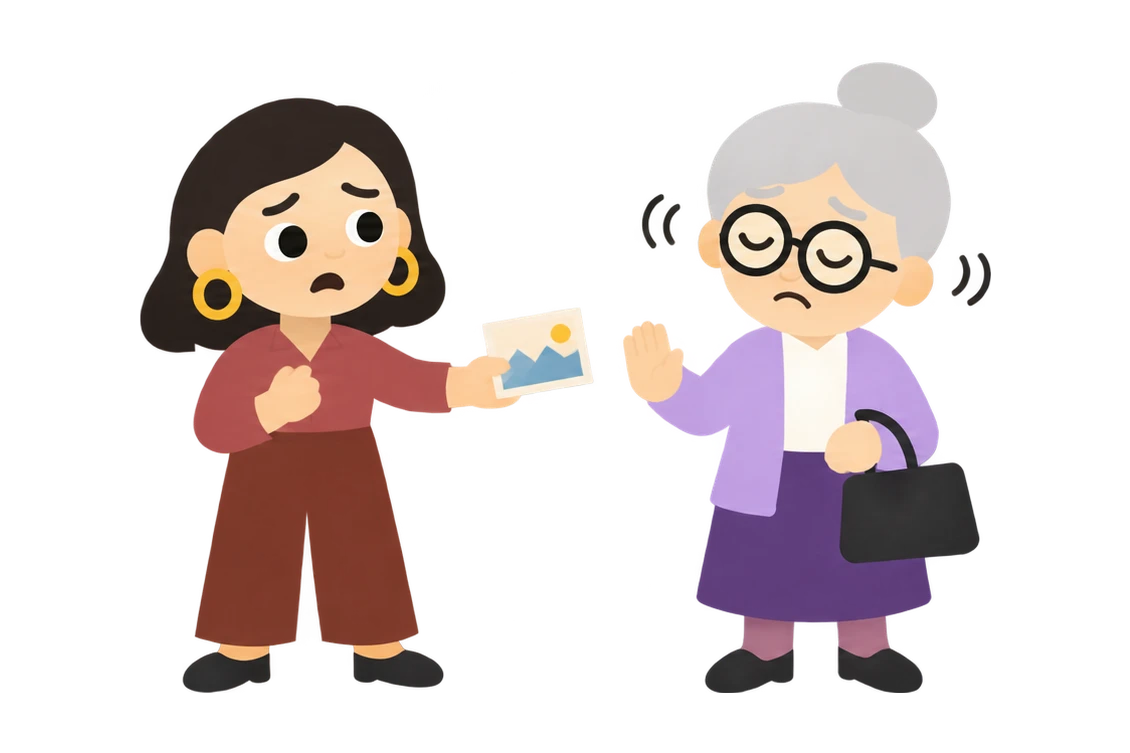
Practise with a person who waits for you. A friend, a tandem partner or a teacher gives you time to finish your sentence. Strangers in a busy shop may switch to English. Start with people who are patient.
Accept mistakes. People will understand you even with a wrong ending or the wrong article. Each mistake shows you what to practise next. If someone corrects you, say “Danke” and repeat the right version.
Questions
Why can I understand German but not speak it?
Understanding asks you to recognise words. Speaking asks you to find them, build a sentence and say it in real time. Most learners get much more practice listening than speaking.
How can I practise speaking German alone?
Describe what you are doing out loud. Read short texts aloud and repeat lines from films or podcasts. Record yourself and listen back. Prepare answers to questions you hear often.
Should I wait until my grammar is better before I speak?
No. You build speaking by speaking. Start with short sentences you know are correct. Your grammar will improve as you use it.