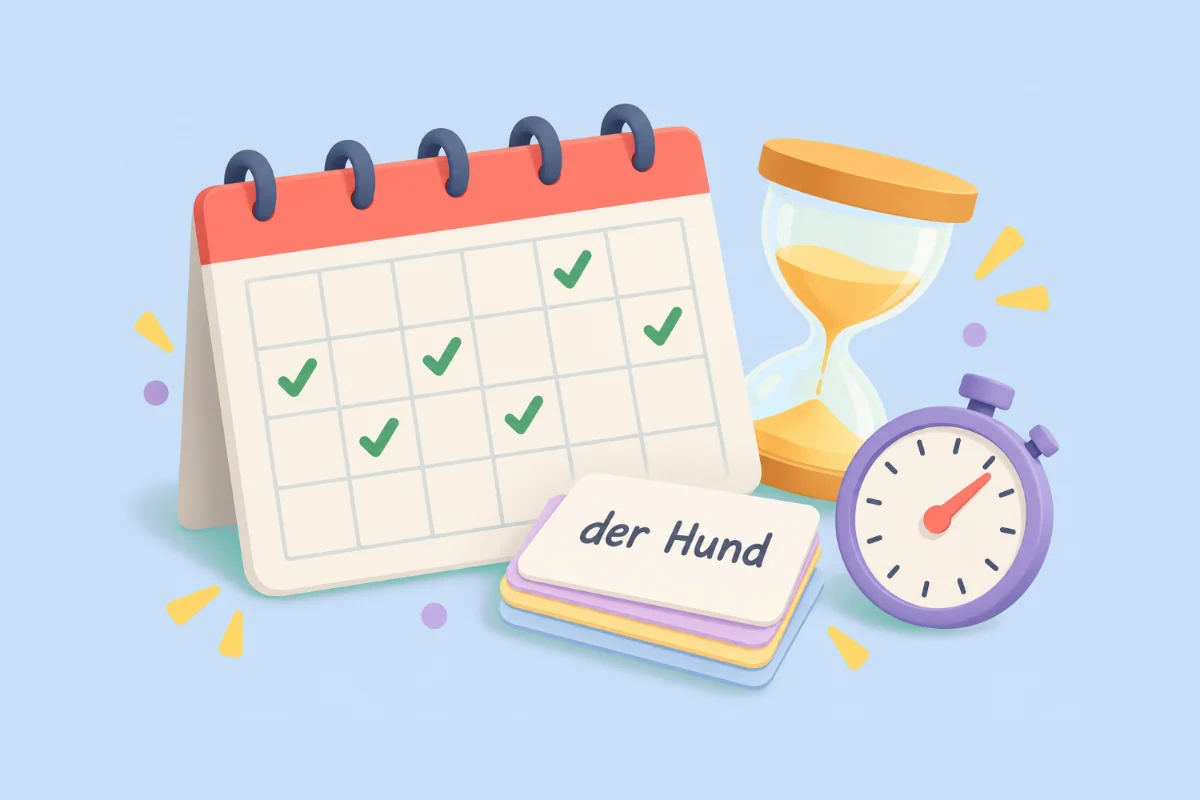
To learn German fast, study a little every day and start speaking in the first week. Learn the phrases you need for your own life first. For a working adult, five to seven hours a week is realistic. At that pace, reaching B1 takes roughly nine months to two years.
Phrases for your real situations
Start with sentences you will need this week. Here are a few that help in almost any conversation.
What to expect
Fast is relative with German. These numbers help you plan.
- German takes time. The US Foreign Service Institute puts German in Category II. French and Spanish sit one group lower. For German it plans about 36 weeks of full-time training (828 class hours) to reach a professional working level.
- B1 takes hundreds of hours. The Goethe-Institut estimates 350 to 650 lessons of 45 minutes to reach B1. That is about 260 to 490 hours.
- Five to seven hours a week adds up. That is about 260 to 365 hours in a year. The Goethe-Institut's range for B1 starts at about 260 hours.
- Speaking comes later than understanding. Most learners understand more than they can say. This gap is normal and closes with practice.
A weekly plan for a working adult
This plan takes about 45 minutes on weekdays and a bit more at the weekend. Move the days around to fit your week.
- Weekdays: 15 minutes of words. Learn five to ten new words or phrases on your way to work. Review the ones from earlier in the week.
- Weekdays: 15 minutes of speaking. Say your new phrases out loud and build short sentences with them. Talk about your day as if someone were listening.
- Weekdays: 15 minutes of grammar or listening. Work on one grammar topic at a time and use it in sentences you say out loud. On the other days, listen to a podcast or video in easy German.
- Saturday: one real conversation. Meet a tandem partner, take a lesson or go somewhere you have to speak German. Thirty to sixty minutes is enough.
- Sunday: review and plan. Go through the week's words once more. Pick the situations you want to practise next week.
What speeds you up
These habits help you make faster progress.
- Speak from the first week. Say every new word and phrase out loud. Speaking is a skill of its own and needs its own practice.
- Short sessions every day. Twenty minutes a day works better than three hours on Sunday. You forget less between sessions.
- Phrases for your real situations. Start with the bakery, the doctor, your neighbour and work. You use these phrases this week, so they stick.
- Whole phrases instead of single words. Learn “einen Termin machen” instead of just “Termin”. You pick up the grammar at the same time.
- German in your daily life. Switch your phone to German. Read signs and letters before you reach for a translator.
What slows you down
Watch out for these common traps.
- Waiting until you are ready. Many learners wait to speak until their grammar is perfect. That day does not come. Short and simple sentences are enough to start.
- Learning nouns without articles. Learn “die Zeitung” instead of “Zeitung”. Adding the article later is much harder.
- Switching to English. People in Germany often switch to English to help you. Ask them kindly to stay in German.
- Long breaks. A week off costs more than you think. On busy days, do five minutes instead of nothing.
- Only reading and listening. Your understanding grows but your speaking stays behind. Plan some speaking time every day.
Sources: U.S. Department of State: Foreign Language Training (FSI), Goethe-Institut London: Frequently asked questions about courses, Goethe-Institut: Goethe-Zertifikat A1, further information
Questions
Can I learn German in three months?
You can reach A1 in three months with daily study. The Goethe-Institut estimates 80 to 200 lessons of 45 minutes for A1. Fluency takes much longer.
How many hours a day should I study German?
Forty-five minutes to an hour a day is realistic for most working adults. Short daily sessions help more than rare long ones.
What is the fastest way to learn German?
Study every day, speak from the start and learn the phrases you need in your own life. An intensive course speeds things up if you have the time.